Since their inception, zombie films have functioned as cultural barometers—mirroring society’s deepest anxieties and moral failures. From Night of the Living Dead dissecting societal collapse, to Dawn of the Dead skewering consumerism, the undead have long served as vessels for examining humanity at its worst. The genre thrives on exposing what people become when structures fall and survival eclipses morality. But what happens when the real world already feels apocalyptic?
28 Years Later: The Bone Temple answers that question not by doubling down on nihilism, but by daring to spotlight something far rarer in modern horror: hope. Written by Alex Garland (Ex Machina, Men, Civil War) and directed by Nia DaCosta (Candyman, Hedda), this sequel to Danny Boyle’s 28 Years Later reframes the zombie narrative as a meditation on care, empathy, and the fragile kindness that might actually save humanity. The result is not only a striking evolution of the franchise, but one of the first truly great films of 2026.
A World Without Humanity And The Cost Of Losing It
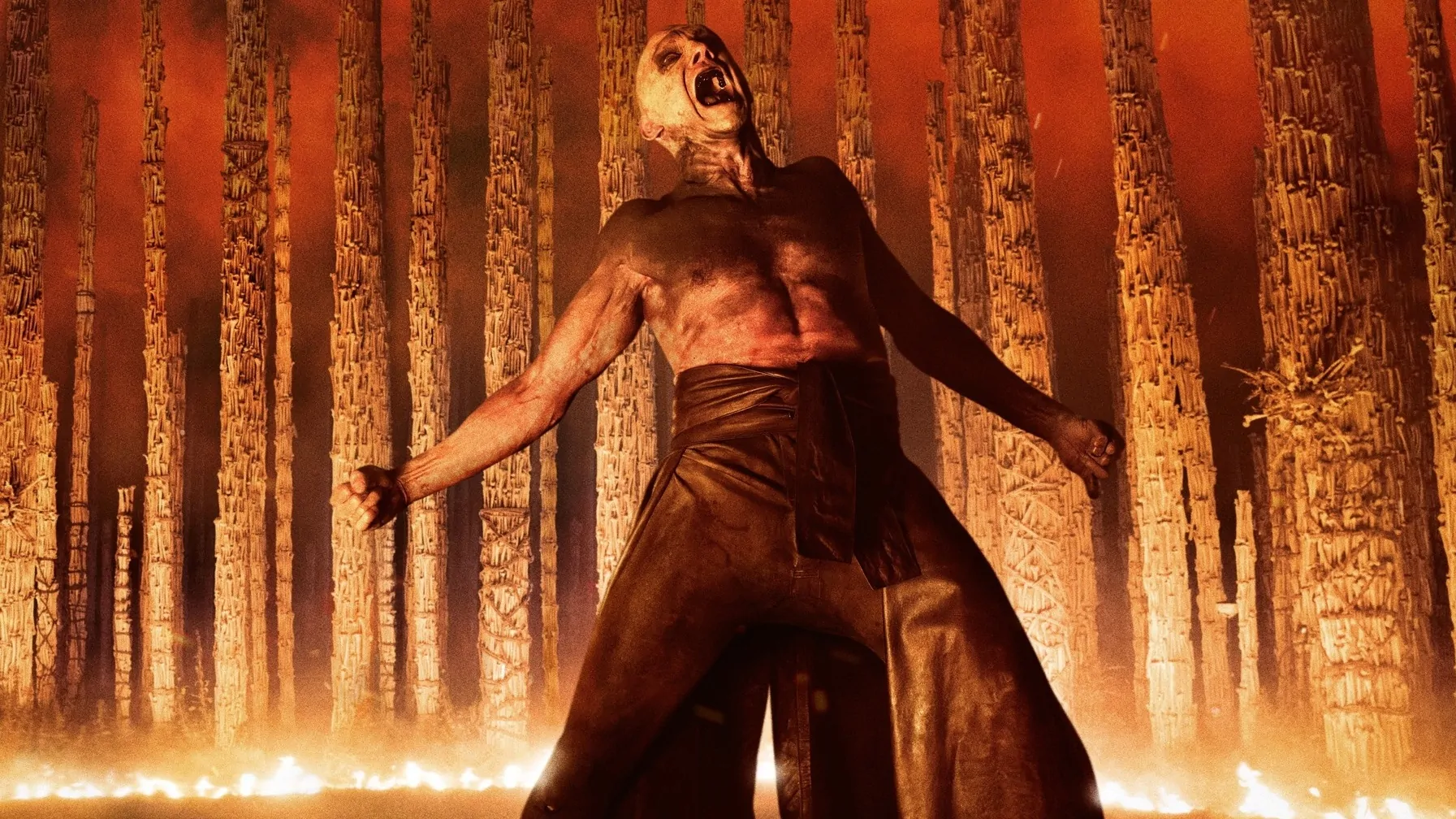
The film picks up with Spike (Alfie Williams), last seen being taken under the wing of Sir Lord Jimmy Crystal (Jack O’Connell), leader of the grotesque cult known as the “Jimmys”. Their outward absurdity—tracksuits, blonde wigs, and a disturbing fascination with Teletubbies quickly gives way to something far more terrifying. This is not eccentric survivalism; it’s ritualized cruelty.
Spike is forced to fight another member to the death as part of his initiation, revealing the gang’s sadistic philosophy: brutality disguised as “charity.” Lord Jimmy’s grandiose delusions—claiming to be the son of the devil, “Old Nick”—are accepted without question by most of his followers. Only Jimmy Ink (Erin Kellyman) begins to quietly doubt the mythology propping up their leader.
DaCosta and Garland open The Bone Temple here with purpose. The Jimmys represent a world entirely stripped of empathy. A mirror of what humanity becomes when power is pursued without conscience. Spike’s inability to stomach their violence marks him as an outsider, but it also underscores the film’s thesis: in a world this broken, even the smallest act of compassion becomes revolutionary.
Humanity Where You Least Expect It
That theme finds its most profound expression in the film’s parallel storyline involving Dr. Ian Kelson (Ralph Fiennes) and Samson (Chi Lewis-Parry), the Alpha leader of the infected. Kelson has been studying Samson, who repeatedly returns to the doctor’s bone temple despite being subdued with morphine darts. What Kelson uncovers is startling: Samson isn’t driven solely by rage—he finds comfort in their encounters.
What unfolds between the two is one of the most unexpected and affecting relationships in recent horror cinema. In a genre where empathy is often portrayed as fatal weakness, The Bone Temple rejects that notion outright. Kelson’s kindness is neither punished nor exploited—it is acknowledged and reciprocated. The idea that an infected Alpha could retain emotional memory and connection fundamentally recontextualizes the rage virus itself.
Somehow, DaCosta and Garland make a friendship between a man and a towering, naked, infected figure deeply moving—and it works. Beautifully.
Direction That Lets Horror And Beauty Breathe
While Danny Boyle’s 28 Years Later leaned into frenetic energy and experimental visuals, DaCosta adopts a more deliberate, steady hand. She allows the audience to sit with discomfort, lingering on suffering long enough to feel its weight, and on moments of connection long enough to savor them. When the film erupts into chaos—particularly in its electrifying third act—DaCosta proves she can command intensity without sacrificing clarity.
Her collaboration with cinematographer Sean Bobbitt (Judas and the Black Messiah) yields what may be the most visually striking entry in the franchise. Bobbitt balances light and darkness with precision, rendering both horror and humanity with equal reverence. Complementing this is Hildur Guðnadóttir’s restrained, haunting score, which hums beneath the film like a quiet warning—unease always present, never overwhelming.
Performances That Anchor The Apocalypse
The film’s emotional resonance would collapse without strong performances, and The Bone Temple delivers across the board. Ralph Fiennes is extraordinary as Dr. Kelson—a man surrounded by death who still chooses mercy. Whether spinning vinyl records in his bunker or commanding the screen in the film’s later moments, Fiennes brings warmth, playfulness, and quiet terror in equal measure.
Jack O’Connell’s Sir Lord Jimmy Crystal walks a dangerous line, but never tips into caricature. His unpredictability makes him chilling, and Garland’s script grants just enough insight into who he once was to make him almost—almost sympathetic.
Alfie Williams continues to ground the story as Spike, its moral compass, while Erin Kellyman’s Jimmy Ink offers a subtle but powerful counterpoint to the cult’s madness. The most surprising standout, however, is Chi Lewis-Parry. His performance as Samson conveys an entire internal evolution beneath the rage, culminating in some of the film’s most devastating and beautiful moments.
A New Benchmark For Zombie Cinema
Only weeks into 2026, 28 Years Later: The Bone Temple has already set a daunting standard. By reframing the zombie genre around empathy rather than despair, Nia DaCosta and Alex Garland breathe new life into a familiar apocalypse and remind us why this franchise remains one of the most thoughtful in horror history.
This is a film that understands the world is already terrifying. What it offers instead is something far rarer: a belief that humanity, even in its darkest hour, is still worth fighting for. 28 Years Later: The Bone Temple arrives in theaters January 16th.