
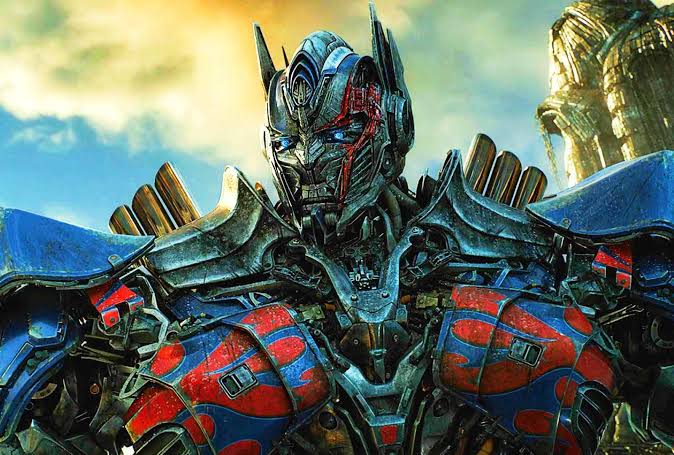
Before Optimus Prime and Megatron became two of Hollywood’s most reliable city-leveling machines, there was a group of filmmakers trying to figure out how to make giant transforming robots work as a live-action spectacle.
Nearly two decades later, two of the most important names behind that transformation are getting back together. Steven Spielberg is officially returning as an executive producer on a new live-action Transformers movie, with Michael Bay back in the director’s chair. According to Deadline, the reunion marks a major return to the franchise’s roots and potentially the beginning of another evolution for one of Paramount’s biggest cinematic properties.
For Bay, it marks his first time directing a Transformers film since 2017’s Transformers: The Last Knight. Meanwhile, for Spielberg, it continues a relationship with the franchise that dates all the way back to the beginning. And for audiences? It could mean the return of the Transformers era that turned giant robots into a billion-dollar box-office phenomenon.
Back To Where It All Began
When Michael Bay’s Transformers arrived in theaters in 2007, few could have predicted just how massive the franchise would become. The story introduced audiences to Sam Witwicky, an ordinary teenager who accidentally found himself caught in an ancient war between the Autobots and Decepticons. His first car just happened to be Bumblebee. And that car happened to be a giant alien robot.
What followed was an explosive combination of science fiction, action, comedy and enormous visual effects that transformed the Transformers brand into a major Hollywood franchise. Spielberg was already involved from the beginning through Amblin Entertainment, helping bring the property to the big screen as one of the producers behind the 2007 film. Bay, meanwhile, became the franchise’s defining cinematic voice. The result? Absolute box-office mayhem.
Michael Bay’s Autobots Are Coming Home
Bay directed the first five live-action Transformers films, establishing a visual language built around massive action sequences, elaborate destruction and robots that could turn virtually anything into a battlefield. The filmmaker’s run included:
Transformers (2007)
Transformers: Revenge of the Fallen (2009)
Transformers: Dark of the Moon (2011)
Transformers: Age of Extinction (2014)
Transformers: The Last Knight (2017)
His tenure wasn’t always a critical favorite, but audiences consistently showed up. The seven live-action Transformers films released between 2007 and 2023 have generated more than $5.2 billion worldwide, with Bay’s five films accounting for the overwhelming majority of that total. Dark of the Moon and Age of Extinction proved particularly unstoppable, each surpassing $1.1 billion globally.
But the franchise eventually began losing some of its momentum. The Last Knight brought in approximately $605 million worldwide against a massive production budget, while Travis Knight’s more character-driven Bumblebee earned approximately $468 million. Steven Caple Jr.’s Transformers: Rise of the Beasts followed in 2023, bringing in roughly $439 million worldwide. The numbers tell an interesting story. The Transformers brand remains recognizable and valuable — but Hollywood has yet to find the formula that consistently recreates the phenomenon of Bay’s early films.
Enter The Original Dream Team
That’s what makes this announcement particularly intriguing. Spielberg and Bay aren’t simply returning to a franchise. They’re returning to a property they helped establish as a cinematic powerhouse. Spielberg’s involvement brings the legacy of one of Hollywood’s most influential filmmakers, while Bay brings the filmmaker most closely associated with the franchise’s original live-action identity. Their reunion also comes after the franchise has already experimented with different creative directions.
Travis Knight brought a more intimate, character-focused approach to Bumblebee, while Rise of the Beasts expanded the mythology and incorporated additional elements of the Transformers universe. Now, Bay is stepping back behind the camera.
The Franchise Has Never Stopped Transforming
One of the most fascinating aspects of Transformers is that the franchise has repeatedly reinvented itself without abandoning its central mythology. The Autobots and Decepticons remain at the heart of the story, but the humans, timelines, characters and filmmaking approaches surrounding them have continued to evolve. That makes this new installment something of a cinematic reset or at least an opportunity for one. At this stage, we’re left with questions. And that’s probably exactly where Paramount wants audiences.
The Next Transformation
There is currently no official release date for the new live-action Transformers movie, meaning details surrounding the story, cast and broader creative direction remain under wraps. But the pieces already in place are enough to make this one of the more intriguing franchise developments on Hollywood’s horizon.
Nearly 20 years after Optimus Prime first rolled onto the big screen, the filmmakers who helped turn Transformers into a cinematic juggernaut are preparing to return to the battlefield. Spielberg is back. Bay is back. And the Autobots are apparently not done transforming. After billions of dollars at the global box office, multiple filmmakers, several generations of characters and enough destroyed cities to make an urban planner cry, Transformers is preparing for another cinematic evolution.